Introduction
What assumptions do we make about people who don’t have children and how does this impact care? My thanks to Elaine Ritchie for this insightful blog describing being childlessness through a deeply personal lens as well as a professional perspective.
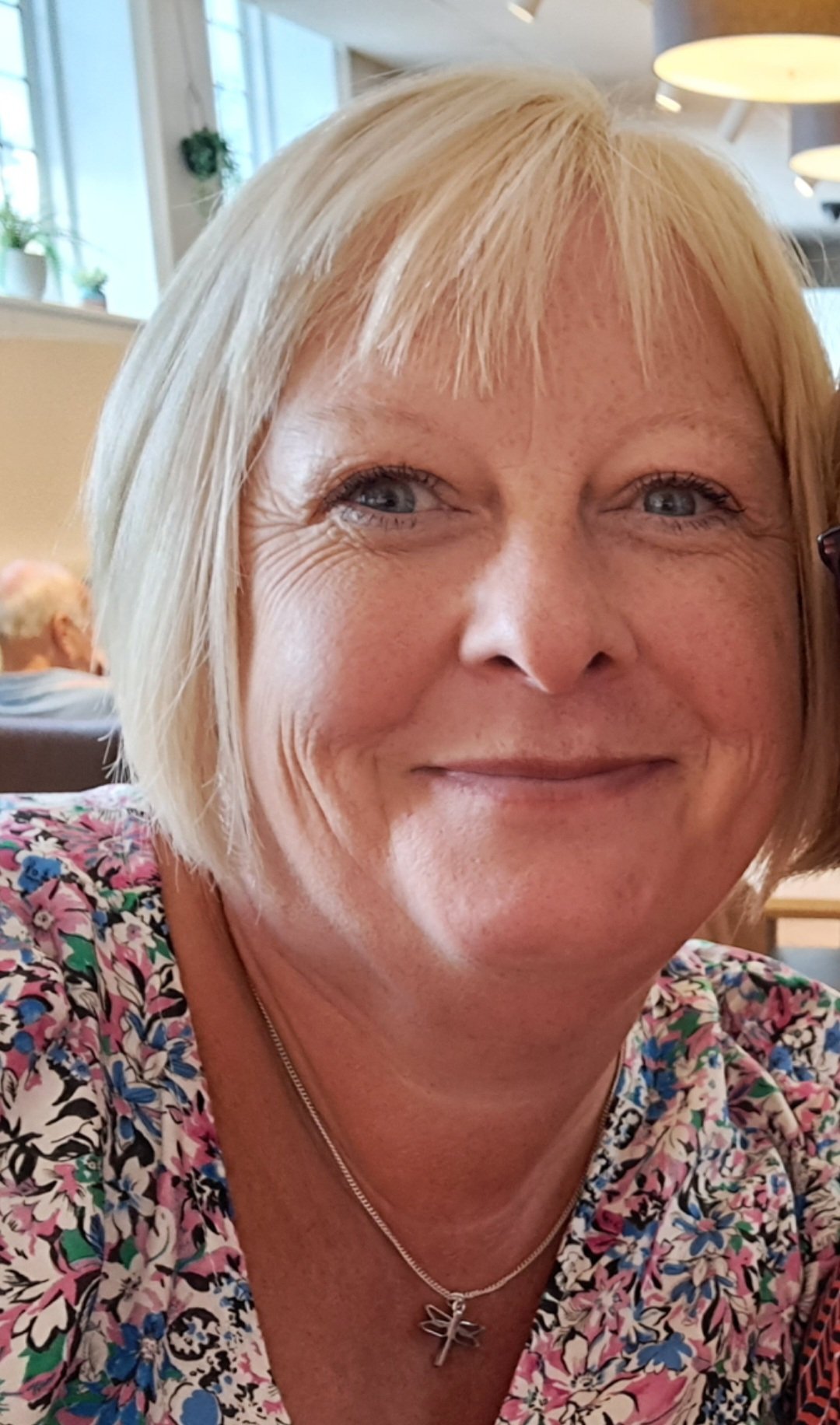
Elaine Ritchie
Clare: Hi Elaine thank you for writing this blog, can we start with an introduction to you and what you do?
Elaine:
Hi Clare, I’m 54 years old and a nurse in Kent. I qualified as a nurse 32 years ago and have worked most of my career looking after people at the end of life. My first job was in an elderly care unit where the majority of people where there to receive palliative care. I then worked as a palliative care nurse specialist with my local community hospice and I have worked as a district nurse where I nursed many end-of-life patients in their own homes. More recently I have worked as a urology cancer nurse specialist in an acute hospital and I’m currently working in an anticoagulation team where I continue to be involved with end-of-life patients.
Clare: What made you reach out to write this blog, is there a specific catalyst or event?
Elaine: I have always wanted children. From as young as I can remember I have always dreamed of my children and making my own family but a few years ago I needed to have a hysterectomy meaning my opportunity to become a mum was no longer an option. Not long after my hysterectomy I suffered a severe grief reaction at not being able to have children and became quite unwell. I didn’t know or understand about it at the time, but childless people can often experience disenfranchised grief. This is a grief that is described as not recognised or acknowledged and a grief of something that does not seem worthy or that we are entitled to feel. For example, I have felt huge grief over the fact that I will never meet the children I dreamed of, to be able to care for them or see them grow up, of never becoming a grandparent and meeting my grandchildren. Not everyone has understood this.
With my surgery and subsequent ongoing recovery together with the deterioration in my own mental health due to my childless grief I had numerous encounters with members of healthcare staff in the hospital and in the mental health service, but I found that very few of them understood or recognised the unique feelings and healthcare needs that the childless community face. I found myself being triggered and upset more than I already was by professionals who were there to help me because they didn’t understand or recognise what I was feeling and didn’t know how to help. This led to me being unable to disclose how I was really feeling and may have resulted in care that I did receive being based on an incomplete picture.
There is little to no knowledge of childlessness within health professionals. As a nurse with 35 years’ experience, I didn’t recognise or understand it until I was affected myself and I have therefore become passionate that members of the childless community are represented within health and care systems. There is little knowledge and education about the impacts of childlessness within health systems and I’d like to see that change. I don’t want to see an entire community underserved at their most vulnerable moments, and I am publicly voicing my own narrative to bring about positive change in mainstream healthcare training.
Clare: What assumptions are made in health and social care and what impact does this have?
Elaine: The main assumption in health and social care is that people have family or someone to look after them or rely upon if they are ill or at the end of life but for those people who do not have children whether that be by choice, not by choice (for example through infertility or by circumstance) or those who have lost contact with their children, this may not be the case.
As a single, childless, only child with no cousins I don’t have any family that could be there to take care of me if I was unwell or at the end of my life and it’s the same for many of us in the childless community. I find it quite a scary and vulnerable situation to be in and it can be very isolating.
There is documented evidence that people without children go into care earlier than those who have support of family. Without a support network around us there is the potential for us to have symptoms that can go unmanaged or undetected with no one to report changes and advocate for medical adjustments. A lack of support can also lead to us living in potentially unsafe living conditions, including dehydration, medication errors and an inability to care for ourselves and no one around to observe and report this.
Navigating healthcare services can be a challenge at times when we are fit and well but add in an illness or incapacity and not having a support network around you and it can lead to missed appointments, delayed identification of issues leading to health crises and possible avoidable admissions to hospital as well as delayed referrals to palliative care for example. It can ultimately mean that we may not get to spend our last days or hours where we want to be.
We still experience the same difficulties and health problems as everyone else but often we don’t have someone around to help us make decisions about our care and future. We may not have anyone around for us to discuss our wishes with or advocate for us and we often rely on professionals to ensure that any needs and wishes that we do have are met. This can lead to the risk of our wishes not being carried out, our practical needs being unmet and risks us undergoing treatments or procedures that we don’t want if we are unable to advocate for ourselves.
Clare: What are the specific challenges for people who are childless either through choice, through no choice or who have lost contact with children when thinking about planning for the future?
Elaine: I think the biggest challenge and fear is who is going to be there for us as we get older and perhaps unwell and less able to look after ourselves? I know having children does not guarantee that they will be there to support or look after you when you are older but AWOC (Ageing Without Children) UK state that 92% of all informal (unpaid) care in the UK is provided by family and evidence also show us that people without children are 25% more likely to go into care and at an earlier age*. This can increase the financial burden for us personally and also for the health and social care sector.
It may not be the big things, very often it’s the small everyday things like how I am going to get to a hospital or GP appointment if I can’t get myself there or am not well enough or capable of using public transport but also who knows where my things are in my house if I am admitted to hospital, who can I call to step up and take care of things at home whilst I am sick and who will be there when I come home? Very often family are a first point of contact for such things, but our options are often limited, and we rely on professional services more.
Financial planning is a big issue, and we need to be getting our finances in order, especially if it is likely that our care will create a bigger financial burden due the lack of unpaid care available to us. Organising savings, care costs, pensions and funeral costs can be more complicated if we don’t have a trusted person to help us and again, we may need to rely on professional services who may possibly not know us and what our wishes are and this can make it less personal.
Seeing how terminal illnesses affected my parents and how they needed me to make financial and care decisions for them, I have got power of attorney paperwork in place identifying someone who I trust and who I know would act in my best interests with this responsibility.
I have made a will which is very important to me. As childless people we often think about what will happen to our things. We don’t have children to leave our treasured belonging to so if we want them to go somewhere specific, we need to make our wishes known and get them officially documented. I personally would hate for all that I have worked so hard for to go to waste and not to the people or places I would wish them to go to. I live alone and have also highlighted to those who need to know, where my will and power of attorney is. It also takes a very good friend to take on the task of managing our funeral, finances and house clearance when the time comes. I have also bought a book that I can document what to do in the event of my death. It tells those dealing with my affairs where my important documents are, who my solicitor is, my bank etc and very importantly to me how I would like my funeral to be conducted.
Members of the childless community may not have anyone trusted or close enough to discuss our thoughts, feeling and wishes at the end of life with. It’s not something anyone likes to think about doing but if we want to remain in control of our future, we need to make our wishes known. Its such a personal thing and when my parents were ill, I felt I knew what their wishes would be as although we never had an official conversation planning for it, over the years we talked about how we would want things to be and they trusted that I would advocate for these wishes which I duly did but I don’t have anyone to have these conversations with. I still want my wishes to be taken into consideration and acted upon if possible, so I need to document these and rely on friends, neighbours or official services to advocate for me. This can be very different from having a close family member who you trust and knows you intimately.
Clare: Can you give an example of what you have experienced personally? Professionally?
Elaine: For me personally, when I had my hysterectomy, I came home after open abdominal surgery and barely able to mobilise to an empty house and no one to help me 24/7. It took a lot of preparation prior to me being admitted with food cooking, shopping, housework and the garden as I knew I would need to manage alone when I came home so I feel I had a small glimpse into what it could be like to be unwell or ageing alone without children. It was tough and it has made me see how preparation is the key. It would’ve been virtually impossible without thinking ahead and putting into place things that I might need. There was no professional support, and I wasn’t even asked how I would manage at home when I was discharged. I think the presumption was that there would be people around for me. Thankfully I had great friends who provided me some support when they could.
On a professional level I have recently nursed a patient with dementia who lived alone. There was no contact between the patient and her child until after she died when a son came forward and she relied solely on a good neighbour and health and social care staff. Her life was quite isolated with carers visiting twice a day to help with tasks at home and my nursing team visiting weekly. My team were there to carry out a specific nursing task but looking at her care holistically we became an advocate for her on many occasions in situations where carers had not stepped in and she needed things like shopping or new bedding. Things we take for granted that we can do or have someone to do for us.
This patients care was managed by social services, and her finances were managed by a private financial advocacy service which had been set up by social services. Recently we became aware of this lady being caused a lot of distress with bailiffs turning up at her door on 2 occasions due to an unpaid bill. She did not understand due to her dementia, and she did not have the capacity to pay this and did not have any access to her finances as they were managed by the finance company (which was paid for out of her own pension money). My team needed to liaise with the finance company, social services and adult safeguarding to ensure this lady was safe and her bill paid so even with professional services involved it shows how even these can fail and highlights the vulnerability of someone without family, or someone trusted around them who can help in such circumstances.
Clare: what messages do you have to health and social care professionals about people who are childless either through choice, not choice or lost contact?
Elaine: To become more aware of childlessness and the effects it has on people. I’d advise them to take time to learn how to talk to and care for childless people becoming aware of the possible triggers and upset that can be caused by what can be seen as a simple question or statement. For me, asking for my next of kin may seem like an easy question but I often find that very difficult to answer and extremely upsetting. The question “do you have children” or “who is around to look after you” again may seem a very simple question and as health professionals we ask these all the time but being aware of the impact of our questions is a big factor.
There needs to be more education in health and social care about those without children. Before I was affected myself, I didn’t know about childlessness and how this can impact someone’s life. I have been guilty as a health professional of not taking someone’s lack of family into consideration or asking triggering questions, but it was through lack of knowledge, I certainly have never done this with the intent of upsetting someone but I’m sure I could’ve caused some upset inadvertently. Training for staff will help them to become aware of our unique needs and how to help provide care to support these.
Health and social care staff need more awareness of the support systems that are out there to help someone remain independent for as long as possible. There is a lot of technology available now so people can be safely monitored and supported independently but is underused due to lack of knowledge of these.
Universal medical records would also be a step forward. Currently there are hundreds of separate IT systems within the NHS and very few of the connect with each other meaning that any needs or wishes that we inform one health professional of and is documented is not necessarily visible to others. We have made great progress in documenting advance care planning wishes being added to GP records which can now be accessed by ambulance crews and some community teams, but we still have a long way to go to have records that are universally accessible by all health professionals that may be involved in your care wherever you are in the country.
Clare: What support or advice do you have for people who are childless either through choice, not choice or lost contact?
Elaine: My own lived experience is of being childless not by choice, and that’s the territory I know form the inside. Because of that I’m going to gently and compassionately step back from offering specific advice to those who are childless by choice of those who have lost contact with their children. I know only too well how it feels for someone, however kindly, project their assumptions onto your experience or offer their advice that misses the mark because they haven’t walked your particular path. The last thing I would ever want is to do that to someone else.
What I can offer, wholeheartedly and without reservation, is my voice for those who are childless not by choice. The world that I know. So, for those who are childless not by choice I’d say – Find your people!
There is an amazing childless community out there and personally, getting to know them has changed my life. Whether you meet others online through the various childless, child-free platforms, meet up in person or attend childless/child free retreats or organised weekends, meeting people who are in the same situation and understand your challenges has been the biggest help to me and I have found the best of friends. It’s tough to put yourself out of your comfort zone but I was welcomed with open arms, and I can’t imagine life without these people now.
I know there is currently a research trial going on that is looking at community living for the childless community so as we age without children, we could have and give back the support and friendship to those in similar situations to ourselves.
I’d also like to say to allow yourself to grieve unapologetically and if appropriate, undergo therapy with a practitioner who understands your situation.
Clare: What key message would you like to share?
Elaine: Preparation is key. Despite not having children around us, we still deserve our wishes for our futures to be respected and acted upon if possible. It may just be a little more complicated, but the power is in our hands for it to happen. An Advance Care Plan stating your wishes, power of attorney and a will are all things that can help ensure we live and die as we would wish.
Resource
AWOC website: Ageing Without Children East Kent (AWOC East Kent)
Podcast: Ageing Without Children and Advance Care Planning with Penny Shepherd
Blog: Ageing Without Children: Advance Care Planning
*updated 2026-08-20
To find out more about my Lasting Power of Attorney service, Advance Care Planning Education or support for people facing a life changing diagnosis, contact me